








Gay Escort Dubai: Anonymity, Hotel Rules & Real Precautions
Dubai operates under a legal framework that most tourists underestimate. Before you search for a gay escort in Dubai, you need to understand exactly what risks exist, how the local scene actually functions, and what steps professionals take to stay off the radar. This is not about fear – it is about being prepared.
The Legal Reality You Cannot Ignore
The UAE criminalises same-sex activity under Federal Penal Code provisions. Penalties range from fines to deportation – and in serious cases, imprisonment. This is not a grey area. The law applies to tourists and residents equally, regardless of nationality.
The catch is simple: enforcement is not random. It is typically triggered by complaints, digital evidence, or hotel staff reports. If you keep your profile low and your behaviour discreet, the statistical risk drops significantly. But «low risk» is not «zero risk.»
Knowing this context shapes every decision you make – from the district you stay in to how you communicate with an escort.
How the Scene Actually Operates
The gay companion scene in Dubai is quiet, structured, and largely digital. There are no visible street-level operations. Professional companions advertise through encrypted platforms, curated directories, and word-of-mouth networks.
Most active providers are either expatriate workers or short-stay visitors. Very few are UAE nationals. The majority of transactions happen through verified platforms where profiles include photos, service listings, and sometimes video verification – a detail that matters enormously for avoiding scams.
Who Uses These Services in Dubai?
- Business travellers on short stays (2–5 nights), typically in DIFC, Business Bay, or Downtown.
- Long-term expats who have established trusted contacts over time.
- Tourists visiting for leisure, often staying in Marina or Jumeirah Beach Residence.
Each group has different risk exposure. Tourists carry the highest risk because they lack local knowledge and often rely on unverified contacts.
Hotel Booking: The Part Most Guides Skip
Your hotel choice is your first security decision. Here is what actually happens at Dubai hotels that most tourists do not know.
ID Scanning and Guest Registration
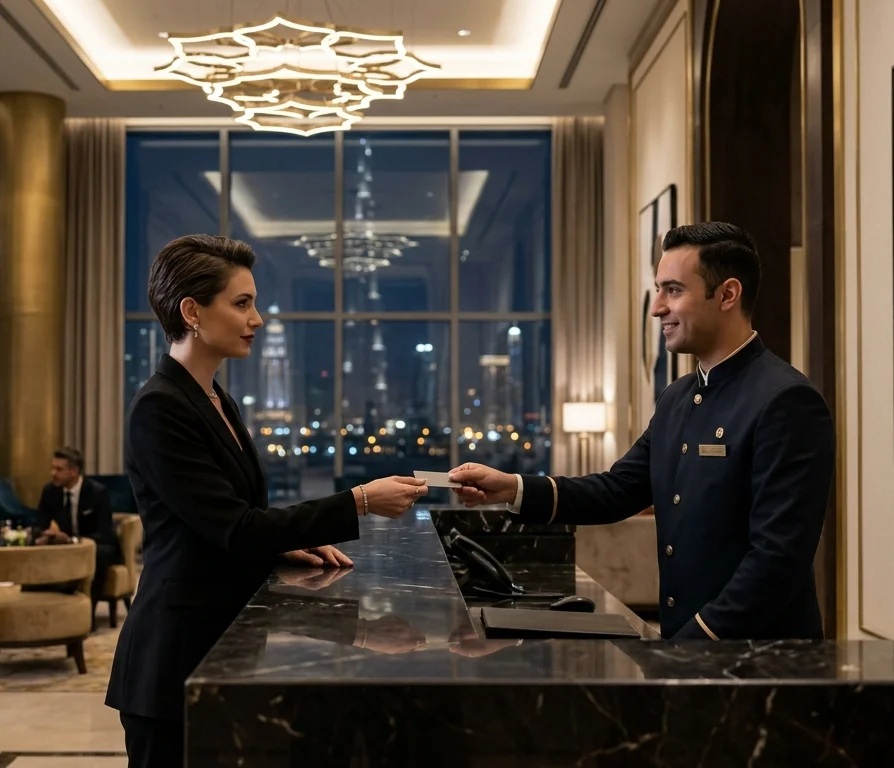
Every hotel in Dubai is required to scan guest passports and upload data to the DTCM (Department of Tourism and Commerce Marketing) system. This is standard across all star categories. When a companion visits your room, most hotels require them to scan their Emirates ID at the front desk before going upstairs.
The truth is: this creates a digital record. In budget hotels in Deira or Bur Dubai, enforcement is inconsistent and front desk staff are often less vigilant. In five-star properties, security protocols are strictly applied.
District Comparison: Risk Profile by Location
| District | Hotel Security Level | Visitor Policy | Practical Discretion |
|---|---|---|---|
| Downtown / DIFC | High | Strict ID scan required | Low – cameras everywhere |
| Dubai Marina / JBR | Medium–High | ID scan, some leniency | Medium – busy, less scrutiny |
| Deira / Bur Dubai | Low–Medium | Inconsistent enforcement | Higher – less monitored |
| Business Bay | High | Corporate-standard security | Low – lobby surveillance heavy |
The practical takeaway: if discretion is a priority, Marina and JBR hotels with large volumes of tourist traffic offer more natural cover than boutique Downtown properties.
Digital Precautions Before You Make Contact
Your phone is the biggest vulnerability. Most people overlook this completely.
Communication Safety Checklist
- Use a VPN before browsing any escort directory. UAE ISPs block many such platforms.
- Avoid WhatsApp for initial contact – it ties directly to your phone number. Use Signal or Telegram with an alias number.
- Never send photos of your face, your hotel room, or your passport to someone you have not independently verified.
- Delete browser history on your device – UAE customs have occasionally reviewed phone data at border control.
- Use a separate email created specifically for this trip. No links to your real identity.
Why does this matter? Blackmail is the most common threat in this market – not police action. Unverified contacts use compromising images or messages as leverage. A verified platform with real reviews removes most of this risk.
Identifying Legitimate Platforms vs. Scam Operations
The gay escort market in Dubai has a significant volume of fraudulent listings. Recognising the difference is a skill.
Red Flags to Reject Immediately
- Profile with stock-photo-quality images and no video verification.
- Requests for upfront payment via Western Union, gift cards, or anonymous crypto wallets.
- No reviews, or reviews that use identical phrasing across multiple profiles.
- Contact only via a single WhatsApp number with no web presence.
- Pressure to meet within the hour before you have confirmed anything.
What Legitimate Listings Show
- Verified photo sets with consistent angles and lighting across multiple images.
- Video previews that match still photos – a strong authenticity signal.
- Genuine client reviews with specific, varied language and dates.
- Clear service descriptions with transparent terms before any meeting.
- Response behaviour that is calm, professional, and unhurried.
Reading verified reviews on a trusted platform remains the single most effective filter available. Profiles with video verification close the gap between expectation and reality – and significantly reduce the chance of meeting a decoy or blackmail operation.
Payment: What Works and What Creates a Paper Trail
Cash remains the safest payment method in Dubai for this type of service. UAE dirhams, withdrawn from an ATM at least 24 hours before the meeting, create minimal traceable connection.
Credit card payments to an individual – even disguised – create a bank record. Cryptocurrency is used by a minority of providers and carries its own traceability risks depending on the wallet type. If a provider insists on crypto upfront before meeting, treat it as a scam signal.
Precautions Specific to Gay Clients
Beyond the standard escort safety framework, same-sex clients in Dubai carry additional exposure that heterosexual clients do not face.
- Room assignments matter. Avoid requesting adjoining rooms or booking through apps that suggest «couples» preferences – these create data patterns.
- Social media silence. Do not post location check-ins while in Dubai. Geotag data has been used in past prosecutions.
- Zero public displays. Any physical contact in hotel lobbies, lifts, or public spaces creates risk – regardless of who initiated it.
- Trust the timing. Established local contacts often advise meeting outside peak hotel lobby hours (avoid 10pm–midnight when security staffing increases).
These are operational decisions, not moral judgements. The goal is to navigate a restricted environment with maximum personal security.
The Entrapment Question
Police entrapment concerns come up regularly in forums. The reality is more nuanced. Formal sting operations targeting individual tourists are rare – the resources required are disproportionate to the outcome. The genuine risk comes from:
- Fake profiles operated by individuals seeking to extort money.
- Hotel staff who report unusual activity to management or security.
- Arguments or noise complaints that trigger police attendance.
The consistent advice from people with real operational experience in this market: quiet, pre-verified, in-room meetings via a trusted directory carry a fraction of the risk of any other method.
Dubai Insider Tip
The most experienced clients in this market never rush the verification process. They read multiple reviews, check for video-verified profiles, and communicate through encrypted channels before committing to anything. They choose hotels in busy tourist districts where the volume of guests naturally reduces individual scrutiny. And they pay in cash, withdrawn separately, with no digital trace connecting them to the transaction. That is not paranoia – it is the standard operating procedure of anyone who has been here more than once.

Essential safety tips for trans escort dubai seekers and how to verify a reputation while staying completely anonymous

A transparent guide to escort dubai prices and the real cost of elite services from Dubai Marina to Palm Jumeirah
You May Also Like

Why a high quality shemale escort in dubai is never cheap and what factors actually determine the final booking rate
How to avoid overpaying for a dubai escort and the red flags that signal a scam website with fake contact numbers